

 5 Min Read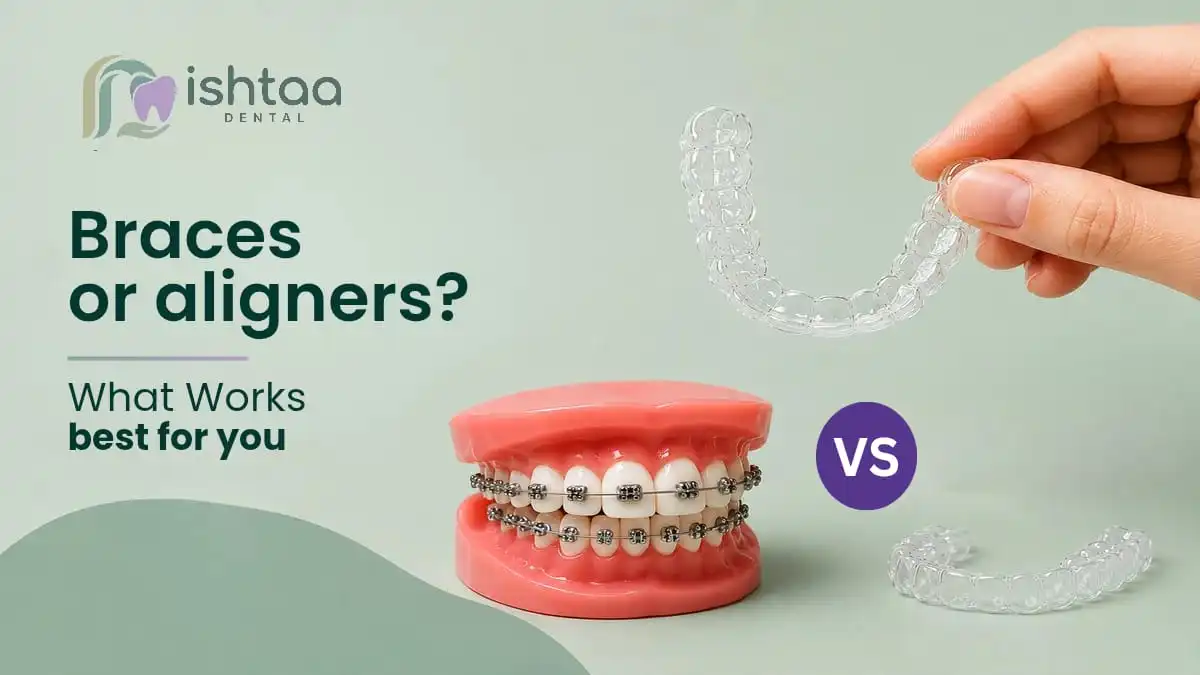
With the greater number of alternatives available, picking the right treatment can feel befuddling. An aligned smile has both an aesthetic and functional element. Properly spaced teeth are easier to chew, help with speech, and enhance oral health in general.
Braces and aligners both straighten teeth and correct bite issues, but they achieve that goal in different ways. The braces treatment is for significant corrections, and aligners are best for convenience and comfort as they are nearly invisible.
Which one is best for you will depend on your dental situation, lifestyle and long-term treatment aspirations. This blog will cover how both differ from each other and the best way to determine which route will take you to your most confident smile.
Braces are an orthodontic device used in the treatment of crooked teeth, tooth gaps, and bite issues. It applies gentle, constant pressure over a designated period to pull teeth into more desirable positions.
This treatment often helps you with manners like:
Regardless if the appliance is fixed or removable, it utilises this same biological process. This means that when something presses on a tooth, it induces a phenomenon known as bone remodelling. One side of the tooth root releases bone while new bone rises on the opposite side to support the tooth in its end position.
Which is why teeth straightening is a time-consuming process, your body is literally remodelling your jaw structure to fit a more natural smile.
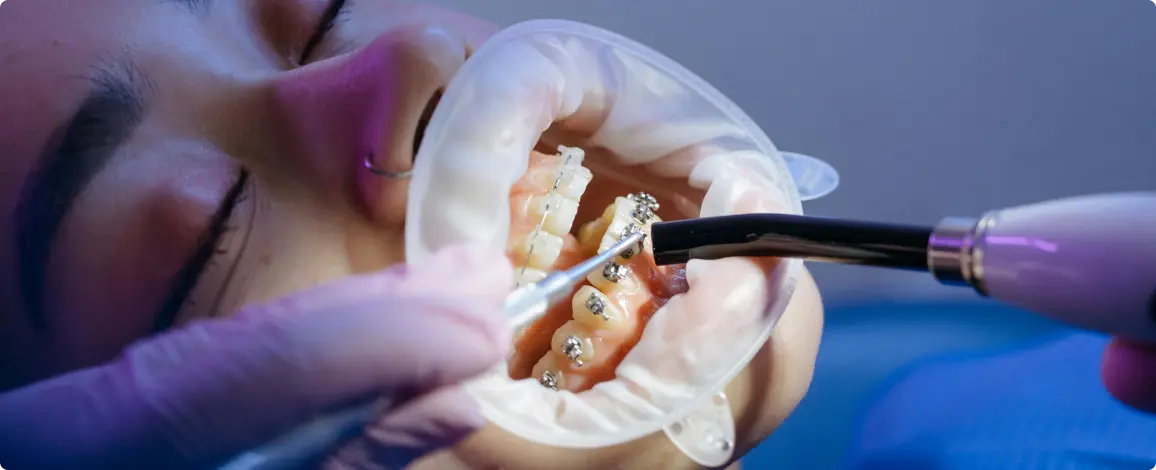
Conventional brace treatments consist of metal brackets that are placed on the teeth, with a thin archwire meant to both connect and move your teeth. An orthodontist will adjust these wires each visit (generally, every 4 to 6 weeks) to help guide the teeth into place.
Braces today are smaller, sleeker, and millions of times more comfortable than old bulky designs. For a more subtle appearance, ceramic braces are also great as they match your teeth's colour.
Benefits of Traditional Braces:
Clear aligners are the almost invisible, dentist-directed custom trays made from transparent medical-grade plastic that fit over your teeth perfectly. Instead of a fixed appliance, they use a series of trays to gradually move teeth into position.
One of the best advantages of aligners over traditional braces is that they are removable, a huge plus for those who have social or professional lives.
Benefits of Clear Aligners:
A ton of patients are shocked to discover that their crooked teeth are really a bite positioning problem:
Aligners have been known to treat mild forms of these also, but traditional braces tend to provide the essential mechanical leverage required in acquiring such radical correction.
Aligners are nearly invisible to the naked eye. Conventional braces are considerably less discreet, even though nowadays many see them as a fashion accessory and have different colored bands.
If you have braces, you’ll need to stay away from chewy, crunchy or hard foods like popcorn, chewing gum and nuts. Aligners give complete freedom, just take them out, eat anything, and brush before putting them back in place.
You will also need to use an interdental brush to clean around the wires in braces. Aligners need to be washed daily in lukewarm water to avoid bacteria from growing and fading of transparent braces.
An orthodontist will first perform a thorough examination before any successful braces treatment. During your orthodontic appointment, your orthodontist will take X-rays, digital scans or a physical mould of your teeth, plotting exactly how they will shift in the coming months.
For braces, this will mean bonding each of the brackets to your teeth, fitting and threading the archwire. For aligners, they will send you the first few sets of trays, and may also include small tooth-coloured attachments to help the trays grip your teeth better and move them into place more effectively.
Braces treatment is considered the gold standard for certain cases even though aligners are in vogue. If you have these, traditional braces may be the right choice for you
One of the biggest mistakes patients make is thinking the journey ends on the day they remove their braces. Our teeth have a memory, they want to return to their original positions.
Regardless of whether you chose braces or aligners, expect to wear a retainer (often just during the night) after completing treatment to keep your teeth in their new homes. You can relapse during this period if you skip it and your teeth start to get crowded.
Retainers are not a choice, they are the last line of defence for all you have invested to see your straight smile.
For the most part, people experience a pressure feeling that is only brief and not a piercing pain. After tightening wires or moving to a new aligner tray, you may be sore for a few days at most. Generally, the discomfort is mild and over-the-counter pain relief is usually sufficient.
For serious and moderate cases, it can take 18 – 24 months and for simple mild cases about six to twelve months. Staying on schedule is all about consistency.
Absolutely. Braces are not just for kids or teens. Indeed, many adults seeking treatment simply wish to improve their overall health and confidence. Modern alternatives such as clear aligners and ceramic braces have made it easier than ever for adults to straighten their teeth without even the most trendy bonuses.
Conclusion
When it comes to choosing braces vs aligners, the decision really depends on your individual situation. When planned in an appropriate manner, both options result in straighter teeth and enhanced oral health.
In terms of treatment, traditional braces are typically better for more complex corrections whereas clear aligners give a discreet experience suitable towards mild to moderate cases. A very crucial step is to consult a specialist in orthodontist who will assess your case and recommend the best treatment which is going to give you optimal, durable results