

 5 Min Read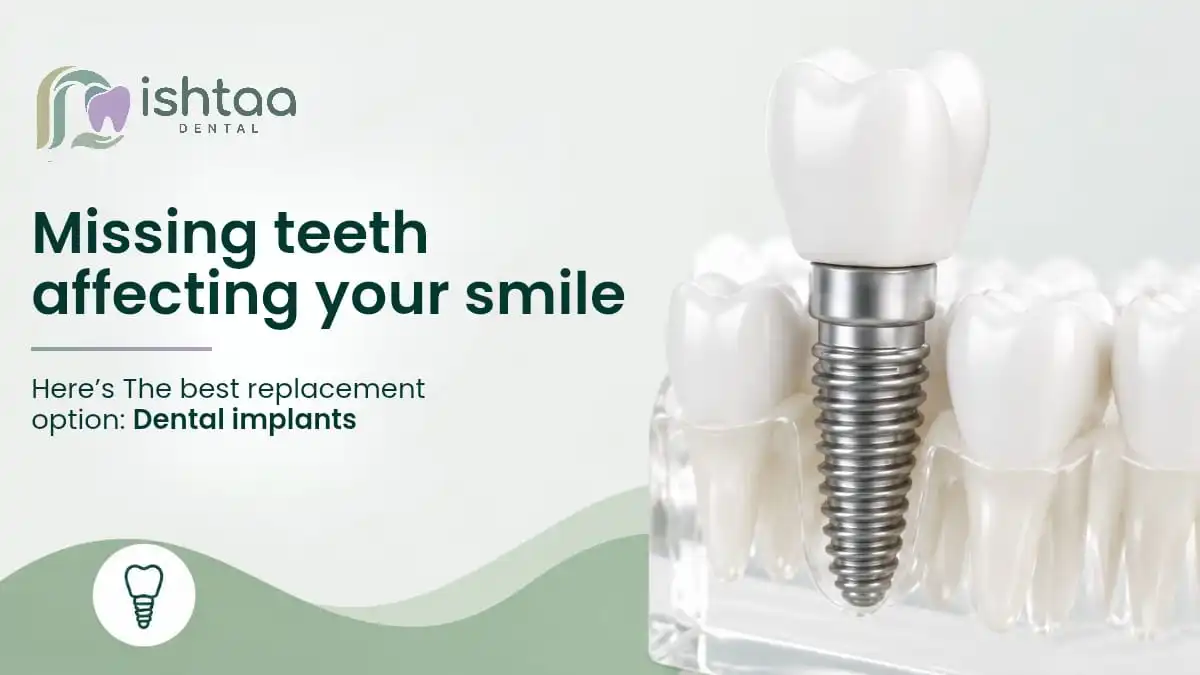
Losing a tooth can impact much more than just the way your smile looks. It can make simple daily tasks like chewing, speaking clearly, or smiling confidently feel difficult or uncomfortable. Many individuals begin avoiding certain foods or feel self-conscious in social settings because of visible gaps in their teeth.
Dental implants have completely changed the way modern dentistry replaces missing teeth. Today, they are widely regarded as one of the most durable and natural-looking tooth replacement options available. Dental implants are designed to function, feel, and appear almost exactly like real teeth.
Whether tooth loss happened because of injury, decay, or gum disease, replacing the missing tooth as early as possible is extremely important. Delaying treatment may lead to complications like jawbone shrinkage, teeth shifting out of alignment, and bite-related issues.
Dental implants are artificial tooth roots made from medical-grade titanium that are surgically placed into the jawbone. Once the implant integrates with the surrounding bone tissue, a custom-made dental crown is attached to complete the replacement tooth.
Because implants mimic the role of natural tooth roots, they provide excellent stability and support. Unlike removable dentures, implants stay securely fixed in place and generally feel much more comfortable and natural.
A Complete Dental Implant Consists Of:
Many people postpone treatment after losing a tooth, especially if the gap is hidden while smiling. However, untreated missing teeth can create long-term oral health problems.
Natural Look and Feel
Implant crowns are carefully designed to blend with the colour, size, and shape of your surrounding teeth. In many cases, people cannot distinguish an implant from a natural tooth.
Excellent Stability
Unlike removable dentures that can shift or loosen, implants remain firmly secured in the jaw. This allows you to eat, speak, and smile confidently without worrying about movement.
Long-Term Durability
With proper maintenance and oral hygiene, dental implants can last for decades or even a lifetime. While bridges and dentures may need regular replacement, implants become a stable part of your oral structure.
Protects Healthy Teeth
Traditional dental bridges often require adjacent healthy teeth to be reshaped for support. Dental implants work independently, helping preserve the strength and health of nearby natural teeth.
Most adults with good general health and missing teeth are suitable candidates for dental implants. You may qualify if you:
Even patients with some degree of bone loss may still qualify. Dentists can often perform bone grafting procedures to rebuild the jawbone before implant placement.
Traditional dentures may shift while eating or speaking and often require adhesives for stability. Additionally, dentures do not prevent the jawbone from shrinking over time.
Dental implants, on the other hand, remain permanently fixed and actively support jawbone preservation. Although implants may involve a higher initial cost, many patients find them to be a better long-term investment due to improved comfort, function, and durability.
Since the procedure is performed under local anaesthesia, patients typically do not experience pain during treatment. After surgery, mild swelling or soreness may occur for a few days, but most patients describe recovery as manageable with prescribed medications and routine aftercare.
How to Maintain Dental Implants
With proper care and regular dental visits, the implant itself can last a lifetime. The crown may eventually need replacement after 15–20 years due to natural wear.
Yes. Age alone is usually not a limitation. As long as overall health and jawbone condition are suitable, older adults can benefit from implants successfully.
Although the implant placement surgery is relatively quick, complete healing and bone integration generally take three to six months before the final crown is attached.
Absolutely. Implants can support single crowns, bridges for several teeth, or even full-mouth restorations such as all-on-four systems.
Conclusion
Missing teeth can significantly affect your confidence, smile, and long-term oral health. Ignoring gaps may eventually lead to jawbone deterioration, chewing problems, and movement of surrounding teeth.
Dental implants are among the most advanced and dependable tooth replacement options available today. They offer a natural appearance, excellent comfort, and long-lasting stability while also helping preserve your jawbone structure. If you have missing teeth, consulting a dental professional early can help you choose the best treatment before additional
complications develop. Taking action at the right time can restore both your smile and your confidence for years to come.